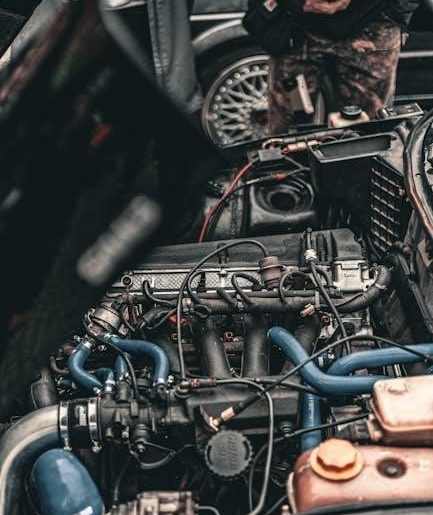
Carburetor tuning is a crucial skill for optimal engine performance, demanding experience and a feel for fuel systems, as noted on December 21, 2025.
What is Carb Tuning and Why is it Important?
Carb tuning, fundamentally, is the process of adjusting a carburetor to achieve the ideal air-fuel mixture for your engine. This ensures peak performance, fuel efficiency, and minimizes emissions. It’s vital because even slight imbalances can lead to issues like poor acceleration, reduced power, and increased fuel consumption.
Experienced tuners develop an almost instinctive understanding of fuel system problems through years of practice, as highlighted on December 21, 2025. Proper tuning isn’t just about maximum power; it’s about reliability and preventing engine damage. Ignoring carb tuning can result in a poorly running engine and potentially costly repairs. It’s a cornerstone of engine maintenance.
Tools and Equipment Needed for Carb Tuning
Essential tools for carb tuning include a set of screwdrivers (flathead and Phillips), a spark plug wrench, and a timing light; A good quality multimeter is crucial for electrical checks. Beyond these basics, a wideband O2 sensor and gauge are highly recommended for precise air-fuel ratio monitoring.
You’ll also need a tachometer to accurately measure engine RPM. While not strictly necessary, a vacuum gauge can aid in diagnosing vacuum leaks. Remember, as noted on December 21, 2025, experience is key, but having the right tools significantly improves accuracy and efficiency during the tuning process. Safety glasses are also a must!

Understanding Carburetor Components
Carburetor components, like float levels, jets, and mixture screws, directly impact fuel delivery and engine performance; mastering these is vital for effective tuning.
Float Level Adjustment
Float level adjustment is a foundational step in carburetor tuning, directly influencing the amount of fuel delivered to the engine. An improperly adjusted float level can cause a range of performance issues, from a rich, fuel-flooded engine to a lean, potentially damaging condition. The float’s primary function is to maintain a consistent fuel level within the float bowl, ensuring accurate metering by the jets.
Typically, float level adjustment involves carefully measuring the distance between the float and the carburetor body when the carburetor is held at a specific angle. This measurement is crucial, as it dictates the fuel supply. Too high a level results in excessive fuel, leading to black smoke, poor fuel economy, and potential fouling of the spark plugs. Conversely, a level that is too low starves the engine of fuel, causing hesitation, lean running, and potentially engine damage. Precise adjustment, following the manufacturer’s specifications, is paramount for optimal performance.

Idle Mixture Screws – Function and Adjustment
Idle mixture screws control the air-fuel ratio at idle speed, a critical aspect of carburetor tuning. These screws regulate the amount of fuel mixed with air before it enters the engine at low throttle openings. Adjusting these screws correctly ensures a smooth, stable idle and responsive throttle transition. Typically, carburetors have one or two idle mixture screws.

The adjustment process usually involves slowly turning the screw(s) in and out while monitoring engine RPM. The goal is to find the position that yields the highest RPM. Once the peak RPM is found, slightly lean the mixture (turn the screw in) until the RPM begins to drop. This ensures a slightly lean, but stable, idle. Proper adjustment minimizes fuel consumption and reduces emissions during idling.
Main Jets and Their Impact on Performance
Main jets are crucial components governing fuel delivery at wide-open throttle and high engine speeds. They dictate the amount of fuel flowing into the carburetor’s main circuit, directly impacting horsepower and engine responsiveness. A jet that is too small will result in a lean mixture, potentially causing engine damage due to excessive heat. Conversely, a jet that is too large creates a rich mixture, leading to reduced power and poor fuel economy.
Selecting the correct main jet size requires careful consideration of engine modifications, altitude, and temperature. Jetting changes are often determined through plug chop analysis (see spark plug reading section) and performance testing, ensuring optimal air-fuel ratios throughout the engine’s powerband.
Needle Jets and Tapered Needles
Needle jets and tapered needles control fuel delivery in the carburetor’s mid-range. As the throttle opens, the slide rises, exposing more of the tapered needle to the airflow; The needle’s shape and the jet’s size determine the fuel mixture during this transitional phase. Different needle tapers offer varying degrees of richness or leanness.
Selecting the correct needle and jet combination is vital for smooth throttle response and preventing stumbling or hesitation. Adjustments involve swapping needles with different tapers or changing the needle jet size. Careful observation of spark plug color and engine performance during mid-range operation guides these adjustments, ensuring optimal fuel delivery.

The Carb Tuning Process – Step-by-Step
Effective carb tuning requires a systematic approach, starting with baseline adjustments and progressing through idle, mid-range, and high-speed settings for peak performance.
Initial Setup and Baseline Adjustments
Before diving into adjustments, ensure your engine is mechanically sound – compression, valve timing, and ignition must be correct. Begin with the fuel screw(s) gently seated, but not fully tightened, typically 1.5 to 2 turns out from fully seated. Verify the float level is within the manufacturer’s specifications; incorrect float levels drastically affect mixture.
Confirm all linkages move freely without binding. A clean air filter is essential for accurate tuning. Warm the engine to operating temperature. Establish a stable idle before proceeding. These baseline settings provide a starting point, allowing for incremental adjustments to optimize performance and avoid immediate issues during the tuning process.
Idle Speed Adjustment
Adjusting idle speed typically involves a screw that controls a throttle plate bypass. Slowly turn this screw to achieve the desired RPM, consulting your engine’s specifications for the correct value. Observe the engine’s behavior; a too-low idle can cause stalling, while a too-high idle wastes fuel and stresses components.

Ensure the adjustment is smooth and stable, avoiding hunting or surging; After setting the idle speed, re-check the idle mixture – these two adjustments interact. Fine-tune the idle speed again if necessary after mixture adjustments. A properly set idle is crucial for smooth operation and fuel efficiency.
Idle Mixture Adjustment Procedure
Adjusting the idle mixture involves carefully turning the mixture screw(s) – in or out – while monitoring engine RPM. Begin by gently turning the screw inward (lean) until the RPM starts to drop, then slowly turn it outward (rich) until the RPM peaks. Continue turning slightly richer until the RPM begins to fall again.
This peak represents the optimal mixture. Fine-tune for the highest stable RPM. Remember that adjustments are sensitive; small changes make a difference. After adjusting, re-check the idle speed, as mixture changes affect it. A correct mixture ensures smooth idling and good throttle response.
Mid-Range Tuning Techniques
Mid-range tuning focuses on the needle jet and tapered needle, impacting performance between idle and full throttle. Adjusting the needle position – raising it richens the mixture, lowering it leans it. Symptoms of a lean mid-range include hesitation or stumbling during acceleration, while a rich mid-range causes sluggishness or black smoke.
Carefully observe throttle response and plug color. Incremental adjustments are key; one clip position at a time. Consider altitude and temperature, as they affect mixture requirements. Proper mid-range tuning delivers smooth, responsive power throughout the typical riding or driving range.
High-Speed Tuning and Jetting
High-speed tuning centers around the main jet, controlling fuel flow at wide-open throttle. A lean condition manifests as a lack of power at high RPMs and a white spark plug, potentially causing engine damage. Conversely, a rich condition results in black smoke, a fouled plug, and sluggish performance.
Jetting changes should be based on plug readings and performance observations. Increase the main jet size to richen, decrease to lean. Accurate tuning ensures maximum power and prevents overheating. Remember altitude and temperature significantly impact jetting needs, requiring adjustments for optimal results.

Reading Spark Plugs for Carb Tuning
Spark plug analysis is vital; color charts reveal combustion health, indicating lean, rich, or optimal mixtures, crucial for precise carburetor adjustments and engine performance.
Understanding Spark Plug Color Charts
Interpreting spark plug color is a cornerstone of carburetor tuning, offering a visual diagnostic of the air-fuel mixture. A tan or light brown color signifies an optimally tuned engine – balanced combustion. White or gray indicates a lean mixture, potentially causing overheating and engine damage due to insufficient fuel. Conversely, black and sooty plugs reveal a rich mixture, leading to reduced power, poor fuel economy, and increased emissions.
Oil fouling, appearing as wet, oily deposits, suggests excessive oil consumption or a failing oil control system. Carbon buildup, a dry, flaky black residue, can stem from a consistently rich mixture or improper ignition timing. Careful observation of these colors provides invaluable insight, guiding jetting and mixture screw adjustments for peak engine performance and longevity. Remember, consistent readings across multiple plugs are essential for accurate assessment.
Interpreting Spark Plug Appearance
Beyond color, the physical condition of a spark plug reveals crucial tuning details. Rounded electrode wear indicates normal operation, while excessive wear suggests a lean condition or abrasive particles in the combustion chamber. Cracked porcelain points to overheating, often caused by a lean mixture or incorrect heat range. Inspect the side electrode for melting or distortion, further confirming overheating issues.
Gap widening over time is normal, but rapid widening signals potential problems. Carbon tracking on the porcelain indicates fuel leakage or a weak spark. A damaged or bent ground electrode can disrupt the spark, causing misfires. Thoroughly examining these features, alongside color analysis, provides a comprehensive assessment of combustion health, guiding precise carburetor adjustments for optimal engine function and reliability.

Advanced Carb Tuning Concepts
Mastering altitude and temperature compensation, alongside multi-carburetor synchronization, and troubleshooting common issues, elevates carburetor tuning to an expert level.
Altitude and Temperature Compensation
As altitude increases, air density decreases, requiring carburetor adjustments for proper fuel-air mixtures. Higher altitudes demand leaner mixtures, often achieved through jetting changes. Temperature significantly impacts fuel vaporization; colder temperatures necessitate richer mixtures, while warmer temperatures require leaner settings. Experienced tuners intuitively understand these relationships.
Effective compensation involves understanding how these factors interact. For instance, a high-altitude location combined with cold temperatures will require a substantially richer mixture than sea level on a warm day. Precise tuning ensures optimal combustion efficiency and prevents issues like bogging or overheating. Ignoring these variables leads to suboptimal performance and potential engine damage.
Multi-Carburetor Synchronization
Engines utilizing multiple carburetors – common in certain motorcycle and classic car applications – demand precise synchronization for balanced performance. Each carburetor must deliver the same air-fuel mixture to its respective cylinder. Synchronization ensures smooth idling, consistent throttle response, and prevents individual cylinders from running lean or rich.
Achieving synchronization typically involves using a vacuum gauge to measure intake manifold pressure at each carburetor throat. Adjustments are made via throttle stop screws until equal vacuum readings are obtained. This process is iterative, requiring careful attention to detail. Improper synchronization leads to uneven power delivery, increased emissions, and potential engine damage over time.
Troubleshooting Common Carb Tuning Issues
Persistent carb tuning problems often stem from overlooked details. Vacuum leaks are frequent culprits, disrupting the air-fuel ratio and causing erratic behavior. Inspect all intake manifold gaskets, carburetor mounting flanges, and fuel lines for cracks or looseness. Another common issue is a clogged pilot jet, leading to poor idling and hesitation.
Incorrect float levels also cause significant problems, resulting in either flooding or lean mixtures. Ensure the float is properly adjusted according to the manufacturer’s specifications. Finally, remember that external factors like altitude and temperature significantly impact carburetor performance, requiring adjustments for optimal results.

Carb Tuning for Specific Engine Types
Engine type dictates tuning; two-stroke engines require richer mixtures and different jetting compared to four-stroke engines, demanding tailored carburetor adjustments for peak performance.
Tuning for Two-Stroke Engines
Two-stroke engines present unique tuning challenges due to their reliance on a precise fuel-air mixture for lubrication and combustion. These engines typically require a richer mixture than four-strokes, demanding careful attention to jetting. Begin by ensuring the float level is correct, as this directly impacts fuel delivery.
Focus on the needle jet and needle position to fine-tune the mid-range response, crucial for power delivery. Adjusting the air screw impacts idle quality and low-end performance. Pay close attention to spark plug readings; a chocolate brown color indicates optimal combustion. A lighter color suggests a lean mixture, while darker indicates a rich one. Remember, two-strokes are sensitive, so small adjustments yield noticeable results.
Tuning for Four-Stroke Engines
Four-stroke engines generally offer a broader tuning window compared to two-strokes. Begin with the idle mixture screws to establish a stable and responsive idle. Next, focus on the main jet to optimize high-speed performance, ensuring sufficient fuel flow without excessive richness. The needle jet and tapered needle control the mid-range, impacting throttle response and acceleration.
Carefully observe spark plug color – a tan or light brown shade signifies proper tuning. Lean mixtures can cause overheating and engine damage, while rich mixtures reduce power and fuel efficiency. Adjust jetting incrementally, testing after each change. Remember that altitude and temperature significantly affect four-stroke carburetor settings, requiring adjustments for optimal performance.

Resources and Further Learning
Online forums, like Shroomery, and dedicated guides offer invaluable insights into carb tuning, complementing practical experience for deeper understanding and troubleshooting.
Online Forums and Communities
Engaging with online forums and communities dedicated to carburetor tuning provides a wealth of knowledge and support. These platforms connect enthusiasts and experts, fostering collaborative problem-solving and knowledge sharing. Forums often host detailed discussions on specific carburetor models, engine types, and tuning techniques.
You can find answers to frequently asked questions, access troubleshooting guides, and learn from the experiences of others. Active participation allows you to refine your skills, receive personalized advice, and stay updated on the latest advancements in carb tuning.
Remember to utilize resources like Shroomery, even if indirectly, as a model for active community engagement and information exchange within specialized fields. These communities are invaluable for both beginners and seasoned tuners.
Recommended Carb Tuning Guides and Books
Supplementing online resources with dedicated guides and books offers a structured learning path for carburetor tuning. While specific titles weren’t directly mentioned in the provided context, seeking out publications focused on small engine repair and performance tuning is beneficial.
Look for materials that cover carburetor theory, component identification, and step-by-step tuning procedures. Consider resources that address specific engine types, such as two-stroke or four-stroke engines, to tailor your learning.
Remember that experience is key, as noted on December 21, 2025, but a solid foundation from reputable guides will accelerate your understanding and improve your tuning accuracy. Combine theoretical knowledge with practical application for optimal results.