
Toshiba Air Conditioner Manual: A Comprehensive Guide
Welcome! This detailed manual assists users in maximizing their Toshiba air conditioner’s performance, offering guidance from initial setup to advanced feature utilization and troubleshooting.
Understanding Your Toshiba Air Conditioner
Your new Toshiba air conditioner represents a significant investment in home comfort. This section provides a foundational understanding of its core functionalities and components. Toshiba prioritizes innovative cooling and heating technologies, designed for efficiency and reliability. Familiarizing yourself with these aspects will ensure optimal performance and longevity of your unit.
Understanding the different modes – cooling, heating (if applicable), fan-only, and auto – is crucial. Each mode caters to specific climate control needs. Furthermore, recognizing the interplay between temperature settings, fan speeds, and airflow direction allows for personalized comfort. This manual will detail these features, empowering you to tailor the air conditioning experience to your preferences. Proper operation, coupled with regular maintenance, guarantees years of dependable service from your Toshiba appliance.
Model Identification and Serial Number Location
Accurate model and serial number identification is vital for support and warranty claims. The model number specifies the unit’s features and capabilities, while the serial number uniquely identifies your specific appliance. These identifiers are essential when contacting Toshiba customer service or ordering replacement parts.
Typically, you’ll find this information on a sticker or label affixed to the unit itself. Look for a label on the side or rear panel of the indoor unit, and potentially on the outdoor condenser unit as well. The label will clearly display “Model No.” and “Serial No.” alongside corresponding alphanumeric codes. Record these numbers in a safe place for future reference. Having this information readily available streamlines any service requests and ensures efficient assistance.
Safety Precautions and Warnings
Prioritize safety during installation, operation, and maintenance. This Toshiba air conditioner utilizes electrical components and refrigerant, demanding careful adherence to safety guidelines. Never attempt repairs yourself; always contact a qualified technician. Disconnect power before cleaning or performing any maintenance. Ensure proper grounding to prevent electrical shock.
Warning: Do not expose the unit to flammable materials or gases. Keep ventilation openings unobstructed. Avoid operating the unit in excessively humid or corrosive environments. Refrigerant leakage requires immediate attention; ventilate the area and contact a professional. Improper installation can lead to hazards – follow installation instructions meticulously. This appliance is not intended for use by persons (including children) with reduced physical, sensory or mental capabilities.
Initial Setup and Installation
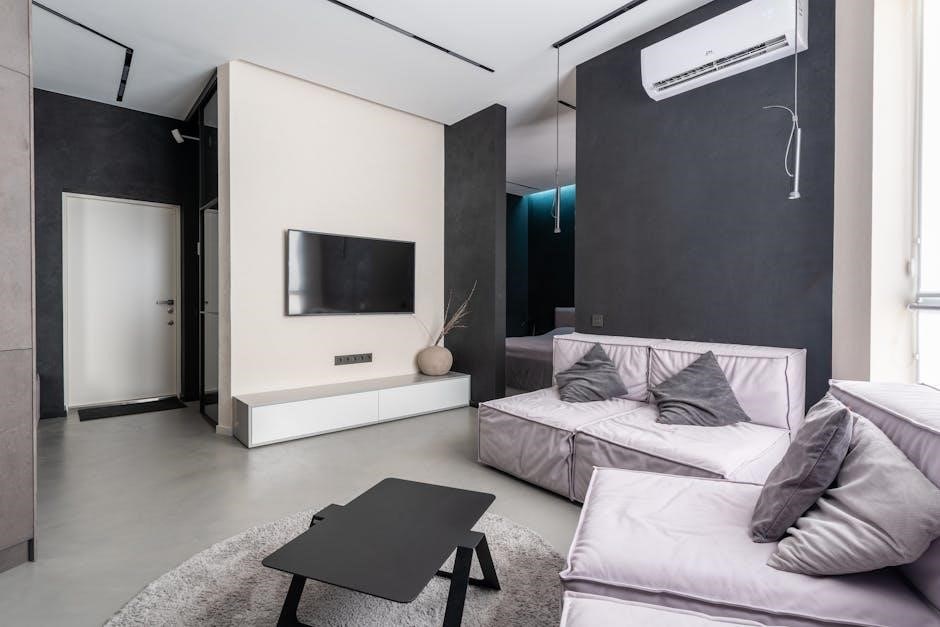
Proper installation is crucial for optimal performance and longevity. Before beginning, verify all components are present and undamaged upon unpacking. Select a location that allows for adequate airflow around the unit – maintain clearances as specified in the installation requirements. Ensure the mounting surface is strong enough to support the air conditioner’s weight.
Electrical connection must comply with local codes. A dedicated circuit is recommended to prevent overloading. Carefully follow the wiring diagram provided. After installation, thoroughly inspect all connections. Run a test cycle to confirm proper operation. If you encounter any difficulties, consult a qualified HVAC technician. Incorrect installation voids the warranty and may create safety hazards.
Unpacking and Inspection
Carefully unpack your new Toshiba air conditioner, taking note of all included components. Retain the original packaging for potential future transport or warranty claims. Thoroughly inspect the unit for any visible signs of damage incurred during shipping – dents, scratches, or broken parts. Document any damage with photographs immediately and contact the retailer or Toshiba customer support.
Verify the model number and serial number on the unit match those on your purchase receipt and the packaging. Ensure all accessories, such as the remote control, batteries, and installation hardware, are present. Do not discard packing materials until you’ve confirmed everything is accounted for and the unit is functioning correctly. A complete inventory prevents potential issues later.
Installation Requirements (Electrical & Physical)
Proper installation is crucial for optimal performance and safety. Ensure the installation location can structurally support the air conditioner’s weight. A level surface is essential to prevent vibrations and noise. Electrical requirements typically involve a dedicated circuit with the correct voltage and amperage, as specified on the unit’s nameplate – do not use extension cords.
Maintain adequate clearances around the unit for airflow and servicing. Check for nearby obstructions like walls or furniture. Professional installation is highly recommended, especially for complex setups. Incorrect wiring or physical installation can void the warranty and pose a safety hazard. Always adhere to local electrical codes and regulations during the installation process.
Remote Control Overview
Your Toshiba air conditioner’s remote control is the primary interface for operation. It features a clear LCD display showing the current settings, including temperature, mode, and fan speed. The remote typically includes buttons for power, mode selection (Cool, Heat, Auto, Fan, Dry), temperature adjustment (up/down), fan speed control, and airflow direction.
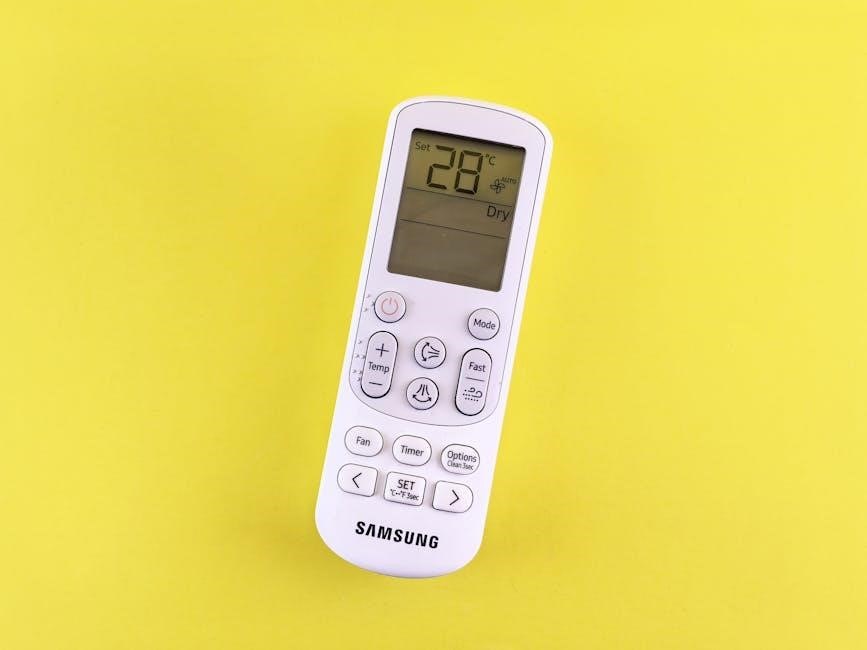
Additional buttons may control timer functions, sleep mode, and eco mode. A ‘Display’ button toggles the information shown on the LCD. Ensure the remote has fresh batteries for reliable operation. Point the remote directly at the indoor unit’s receiver for optimal communication. Familiarize yourself with each button’s function for convenient and efficient control of your air conditioning system.
Button Functions and Display Symbols
The Power button initiates or terminates operation. Mode buttons (Cool, Heat, Auto, Fan, Dry) select the desired climate control setting. Temperature Up/Down buttons adjust the target temperature. Fan Speed buttons cycle through Low, Medium, High, and Auto fan speeds. Swing/Airflow Direction buttons control the louvers for customized airflow.
Display symbols include a snowflake for cooling, a flame for heating, a fan for fan-only mode, and a droplet for dehumidification. A timer symbol indicates scheduled operation. Error codes, if displayed, signal a system malfunction requiring attention. Understanding these symbols and button functions ensures effective control and troubleshooting of your Toshiba air conditioner. Refer to the full manual for detailed explanations of all features.
Operating Instructions
Initial Operation: Ensure the unit is properly installed and connected to power. Use the remote control to power on the air conditioner. Select your desired mode – Cool, Heat (if applicable), Fan, Auto, or Dry – using the corresponding button. Adjust the target temperature using the Up/Down temperature buttons.
Mode Selection: Cooling mode lowers the room temperature, while heating raises it. Auto mode automatically selects cooling or heating based on the ambient temperature. Fan mode circulates air without temperature adjustment. Dry mode reduces humidity. Utilize the fan speed and airflow direction controls for personalized comfort. Always refer to the safety precautions before operating the unit.
Powering On/Off and Basic Operation
Powering On: To activate your Toshiba air conditioner, press the “Power” button on either the remote control or the unit itself. A confirmation indicator light will illuminate, signifying the unit is operational. Ensure the unit has been properly installed and connected to a functioning power source before attempting to power it on.
Basic Operation: Once powered on, use the “Mode” button to cycle through available settings – Cool, Heat (if equipped), Fan, Auto, and Dry. Adjust the desired temperature using the “Up” and “Down” arrow buttons. The current settings are displayed on the unit’s display panel or the remote control screen. To power off, simply press the “Power” button again.
Cooling Mode Settings
Temperature Adjustment: Within Cooling Mode, utilize the up and down arrow buttons on your remote to select your preferred temperature. The display will show the set temperature, typically ranging from 60°F to 86°F (16°C to 30°C). Lower temperatures provide increased cooling, while higher temperatures conserve energy.
Fan Speed Control: Adjust the fan speed using the dedicated “Fan Speed” button. Options usually include Auto, Low, Medium, and High. Auto mode automatically adjusts fan speed based on the temperature difference. Higher fan speeds deliver quicker cooling but consume more power.
Dry Mode: Some models feature a “Dry” mode, which reduces humidity without significantly lowering the temperature, offering a comfortable environment.
Heating Mode Settings (If Applicable)
Activating Heating: If your Toshiba unit offers heating capabilities, press the “Mode” button on the remote until the heating icon (often a sun or flame symbol) appears on the display. Ensure the unit is properly configured for heating operation, as detailed in the installation section.
Temperature Control: Similar to cooling, use the up/down arrow buttons to set your desired room temperature. Heating mode typically allows a range from 50°F to 86°F (10°C to 30°C). The unit will cycle on and off to maintain the set temperature.
Defrost Function: During colder temperatures, the outdoor unit may accumulate frost. The unit will automatically initiate a defrost cycle to remove the ice, temporarily switching to cooling mode.
Fan Speed and Airflow Direction Control
Fan Speed Adjustment: Your Toshiba air conditioner offers multiple fan speed settings – typically Low, Medium, High, and Auto. Use the “Fan Speed” button on the remote to cycle through these options. Auto mode adjusts the fan speed based on the temperature difference between the setpoint and the room temperature.
Airflow Direction (Louvers): The unit’s louvers control the direction of airflow. You can adjust them horizontally and vertically using the remote’s “Airflow Direction” or “Swing” buttons. Select “Auto Swing” for continuous, automated movement.
Precautions: Avoid directing airflow directly onto occupants for extended periods. Ensure the louvers are not obstructed, allowing for optimal air circulation throughout the room. Proper airflow enhances comfort and efficiency.
Timer and Scheduling Functions
On/Off Timer: Your Toshiba air conditioner features both On and Off timers for convenient operation. The “Timer” button on the remote allows you to set a future time for the unit to automatically turn on or off. This is ideal for pre-cooling or heating a room before you arrive or for energy savings while you sleep.
Scheduling: Some models offer advanced scheduling capabilities, allowing you to program different settings for various times of the day or days of the week. Consult your specific model’s instructions for detailed scheduling options.
Setting the Timer: Use the remote to input the desired time, and confirm your selection. Ensure the clock on the unit is accurately set for proper timer function.
Maintenance and Cleaning
Regular maintenance is crucial for optimal performance and longevity of your Toshiba air conditioner. Consistent cleaning prevents dust and debris buildup, ensuring efficient operation and improved air quality. Always disconnect the power supply before performing any maintenance.
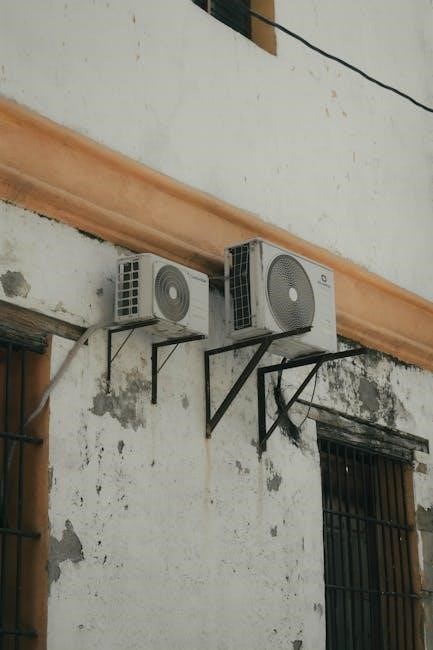
Air Filter Cleaning: Clean the air filters at least once every two weeks, or more frequently in dusty environments. Remove the filters, wash them with mild detergent and water, and allow them to dry completely before reinstalling.
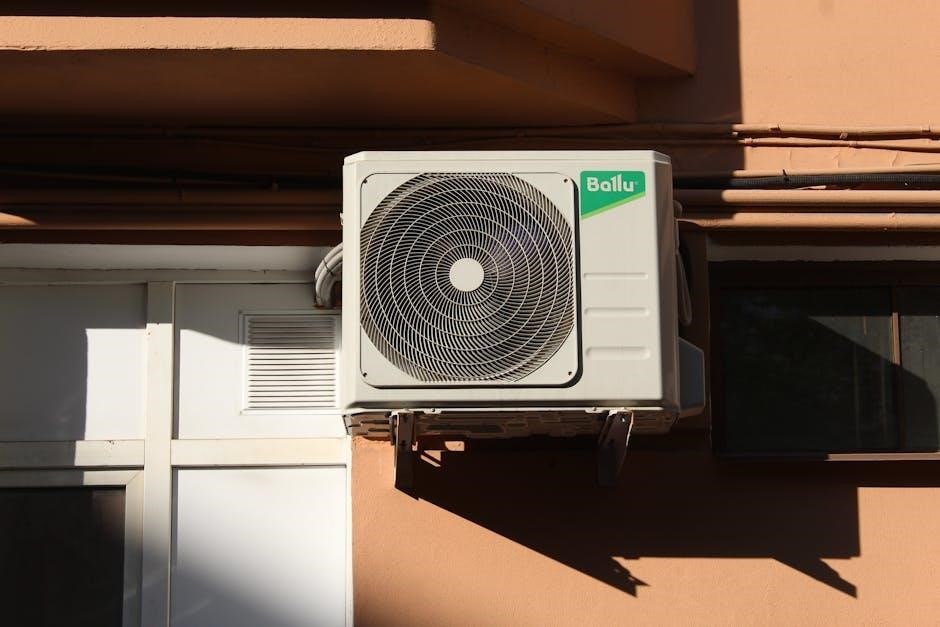
Coil Cleaning: Periodically clean the condenser and evaporator coils to remove dirt and improve heat transfer. Professional cleaning is recommended for optimal results. Exterior Cleaning: Wipe down the exterior surfaces with a damp cloth.
Air Filter Cleaning and Replacement
Maintaining clean air filters is paramount for efficient operation and indoor air quality. Toshiba recommends cleaning or replacing filters every two weeks, or more often with pets or heavy dust. To clean: Gently vacuum the filter to remove loose particles, then wash with mild soap and lukewarm water. Rinse thoroughly and allow to completely dry before reinstalling – never operate the unit with a damp filter!
Replacement filters should match the model number specified in your owner’s manual. Check the filter’s condition regularly; if damaged or excessively dirty, replace it immediately. A clogged filter restricts airflow, reducing cooling/heating efficiency and potentially damaging the unit. Proper filter maintenance extends the lifespan of your Toshiba air conditioner.
Coil Cleaning Procedures
Maintaining clean condenser and evaporator coils is crucial for optimal performance. Before cleaning, disconnect power to the unit! Use a commercially available coil cleaner specifically designed for air conditioners – avoid harsh chemicals. Gently spray the coils, following the product’s instructions, and allow sufficient dwell time. Rinse thoroughly with water, ensuring no cleaner residue remains.
For the outdoor condenser coil, carefully remove any debris like leaves or grass. For the indoor evaporator coil, access may require removing an access panel (consult your manual). A soft brush can aid in removing stubborn dirt. Dirty coils reduce heat transfer, increasing energy consumption and potentially leading to compressor failure. Professional cleaning is recommended annually.
Exterior Cleaning and Care
Regularly cleaning the exterior of your Toshiba air conditioner maintains its appearance and prevents corrosion. Use a mild soap and water solution with a soft cloth to wipe down the cabinet. Avoid abrasive cleaners or high-pressure water, as these can damage the finish. Pay particular attention to the outdoor unit, removing any accumulated dirt, leaves, or debris that could obstruct airflow.
Inspect the exterior fins for damage and gently straighten any bent fins with a fin comb (available at appliance stores). Ensure the area around the outdoor unit remains clear for proper ventilation. Periodically check for signs of rust and address them promptly with appropriate rust inhibitors. Proper exterior care extends the lifespan and efficiency of your unit.
Troubleshooting Common Issues
Encountering problems? This section addresses frequent concerns. If the unit doesn’t power on, verify the power cord and circuit breaker. For poor cooling/heating, check air filters and ensure vents aren’t blocked. Strange noises often indicate loose components – contact a technician. Error codes displayed on the unit signal specific malfunctions; consult the ‘Error Codes’ section for details.
Remote control issues may stem from weak batteries or obstructions. If problems persist after these checks, do not attempt self-repair. Contact authorized Toshiba service personnel for diagnosis and repair. Ignoring issues can lead to further damage and void your warranty. Prioritize safety and professional assistance;
Unit Not Powering On
Is your Toshiba AC unresponsive? First, ensure the unit is properly plugged into a functioning power outlet. Check the circuit breaker or fuse box to confirm power is reaching the outlet. A tripped breaker or blown fuse is a common cause. Next, verify the remote control has fresh batteries and is set to the correct mode. Confirm the power cord isn’t damaged or frayed.
If these steps don’t resolve the issue, there might be an internal electrical problem. Do not attempt to disassemble or repair the unit yourself. Contact a qualified technician for assistance. Ignoring electrical faults can be dangerous. Always prioritize safety and professional diagnosis.
Cooling/Heating Performance Issues
Is your Toshiba AC not cooling or heating effectively? Begin by checking the air filter – a clogged filter restricts airflow, reducing performance. Ensure the filter is clean or replaced. Verify that all vents are open and unobstructed, allowing for proper air circulation throughout the room. Inspect the outdoor unit for debris like leaves or snow, which can block airflow.
If the problem persists, there might be a refrigerant leak or a compressor issue. Do not attempt to handle refrigerant yourself; it requires professional expertise. Contact a qualified HVAC technician for diagnosis and repair. Reduced performance can also indicate a need for professional maintenance.
Error Codes and Their Meanings
Toshiba air conditioners utilize error codes to signal malfunctions. These codes, displayed on the unit’s panel or remote, pinpoint the source of the problem, aiding in efficient troubleshooting. For example, “E01” might indicate a sensor error, while “E02” could signify a compressor issue. Consult your specific model’s error code list within this manual for a comprehensive explanation.
Do not ignore error codes! Repeated occurrences suggest a serious problem requiring professional attention. Attempting self-repair without understanding the code’s meaning could worsen the issue or void your warranty. Record the error code before contacting a technician for faster service.
Remote Control Malfunctions
If your Toshiba remote control isn’t responding, begin with basic checks. Ensure fresh batteries are correctly installed, verifying polarity. Obstructions between the remote and the air conditioner’s sensor can also interfere with the signal; remove any objects blocking the line of sight. Try resetting the remote by briefly removing the batteries.
If issues persist, the remote may require cleaning. Gently wipe the contact points and sensor window with a soft, dry cloth. If the remote is damaged – buttons are unresponsive or the casing is broken – replacement is often necessary. Contact Toshiba customer support or an authorized dealer for a compatible replacement remote control for your specific model.
Advanced Features (Model Dependent)
Certain Toshiba air conditioner models boast innovative features designed for enhanced comfort and efficiency. Eco Mode optimizes energy consumption by adjusting cooling or heating output, reducing electricity bills without significant comfort loss. Sleep Mode gradually adjusts the temperature overnight, providing a comfortable sleep environment and further conserving energy.
Self-Diagnosis functions monitor system performance, detecting potential issues and displaying error codes for quicker troubleshooting. Wi-Fi connectivity, available on select models, enables remote control via smartphone apps, offering convenient operation from anywhere. Explore your model’s specific features in the detailed sections of this manual to unlock its full potential.
Eco Mode and Energy Saving Tips
Toshiba’s Eco Mode intelligently optimizes cooling and heating operations to minimize energy consumption while maintaining a comfortable indoor climate. This feature subtly adjusts fan speeds and temperature settings, reducing power usage without drastically impacting perceived comfort levels. To maximize energy savings, ensure proper insulation in your home, sealing any drafts around windows and doors.
Regularly clean air filters to promote efficient airflow, preventing the unit from overworking. Utilize the timer function to schedule operation only when needed, avoiding unnecessary cooling or heating during unoccupied periods. Consider using ceiling fans in conjunction with your air conditioner to distribute air more effectively, reducing the strain on the unit.
Sleep Mode Operation
Toshiba’s Sleep Mode is designed to create a comfortable sleeping environment while conserving energy. When activated, this mode gradually increases (in cooling) or decreases (in heating) the set temperature during the night, aligning with your body’s natural temperature fluctuations during sleep. This prevents overcooling or overheating, enhancing sleep quality and reducing electricity usage.
To engage Sleep Mode, simply press the dedicated “Sleep” button on your remote control. The unit will automatically adjust the temperature over a pre-programmed schedule, typically over several hours. You can often customize the sleep mode settings, such as the duration and the degree of temperature adjustment, to suit your personal preferences. Enjoy a peaceful and energy-efficient night’s rest!
Self-Diagnosis Function
Your Toshiba air conditioner is equipped with a sophisticated self-diagnosis system designed to detect and report potential operational issues. This function continuously monitors key components and sensors within the unit, identifying malfunctions before they escalate into major problems. When an error is detected, the air conditioner will typically display an error code on the indoor unit’s display panel.
These error codes serve as valuable clues for troubleshooting. Refer to the “Error Codes and Their Meanings” section of this manual to decipher the code and understand the nature of the problem. In some cases, the self-diagnosis function may automatically shut down the unit to prevent further damage. Contact a qualified technician if you encounter persistent error codes or are unable to resolve the issue yourself.
Wi-Fi Connectivity and Smart Control (If Applicable)
Certain Toshiba air conditioner models offer integrated Wi-Fi connectivity, enabling remote control and monitoring via a dedicated smartphone application. To establish a connection, download the Toshiba Smart App from your device’s app store and follow the on-screen instructions. The app allows you to power the unit on/off, adjust temperature settings, change modes, and monitor energy consumption from anywhere with an internet connection.
Smart features also include scheduling capabilities, allowing you to create customized cooling or heating schedules to optimize comfort and energy efficiency. Voice control integration with popular virtual assistants may also be available, providing hands-free operation. Ensure your home Wi-Fi network is stable and secure for optimal performance.